Politics
Illinois Just Named an Official State Bee, Here’s the Buzz on the Black-and-Gold Bumble Bee
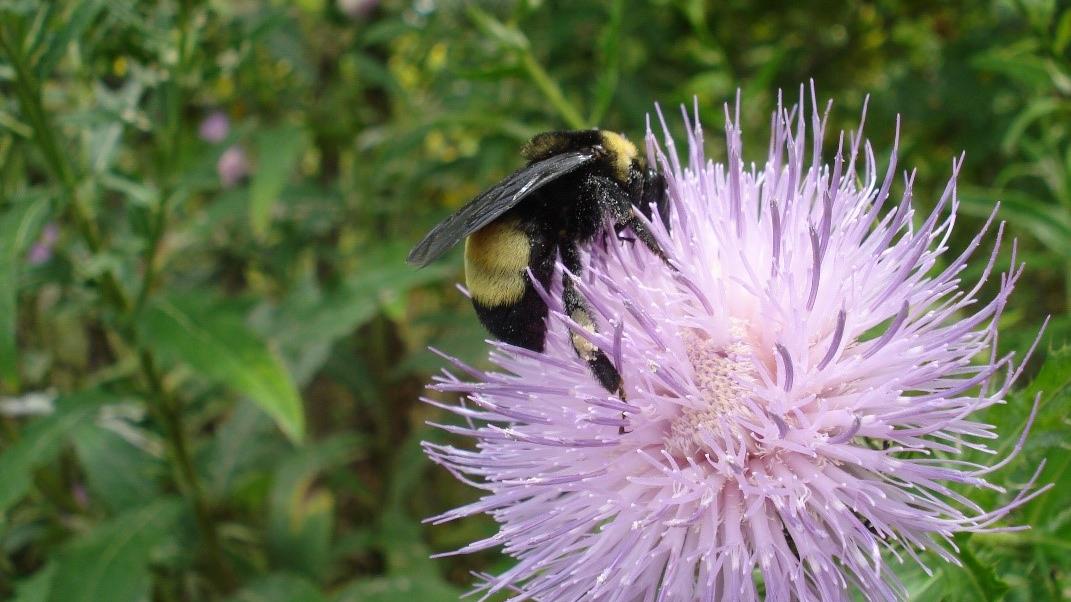 A queen black-and-gold bumble bee collects pollen from a thistle. (Anson Main / USGS Missouri Cooperative Fish and Wildlife Research Unit)
Note to grown-ups looking to get legislation passed in Illinois: It helps to have the backing of school kids.
While some high-profile bills failed to garner enough support during the spring session of the Illinois General Assembly, the designation of an official state bee — promoted by students from Naperville’s Lincoln Junior High School — sailed through both the House and Senate.
The black-and-gold bumble bee (Bombus auricomus) now joins other recent additions to the roll call of state emblems that were originally proposed by students, including the giant puffball as state fungi and dolostone as state rock.
The black-and-golden bumble bee is one of the more than 400 species of native bees in Illinois, which run the gamut from bumble and carpenter bees to mason and mining bees. Some are specialists, some are generalists, and it’s this variety that ensures native flowers of all shapes and sizes are pollinated.
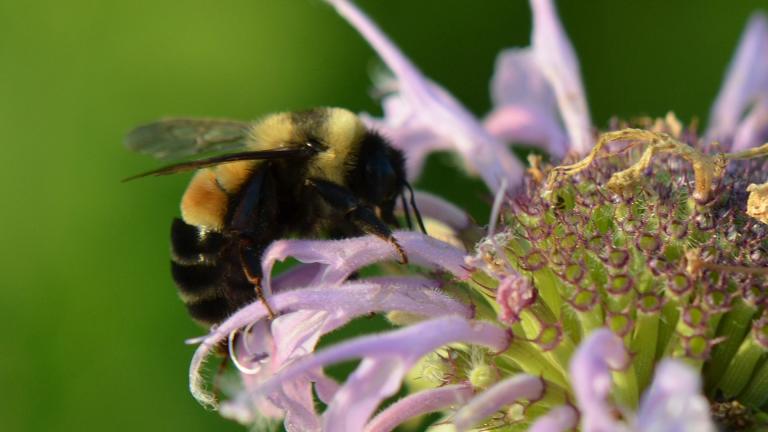
Bombus auricomus, which nests underground, is found in various grassland and prairie habitats including sand, gravel, shrub, dolomite and black-soil. It’s an important pollinator of flowers such as bee balm, clovers and members of the boneset family, according to the Illinois Department of Natural Resources.
Yet, like most native bees, the black-and-gold bumble bee has nowhere near the name recognition as the non-native honey bee, which competes for resources.
“These students are bringing awareness to a key environmental issue — raising awareness of and ultimately protecting our pollinators, like the black-and-gold bumblebee,” said state Rep. Janet Yang Rohr (D-Naperville), who shepherded the legislation in the House. “When we protect our pollinators, we’re protecting our entire environment.”
The community science project Bumble Bee Watch has a helpful identification guide for myriad North American species. The black-and-gold bumble bee is very similar in appearance to the American bumble bee (Bombus pensylvanicus).
Contact Patty Wetli: [email protected]